 Fuyang Kejin Decoration Materials Co., Ltd

In hot, humid markets, a bathroom ceiling faces a challenge that goes beyond everyday water exposure. Warm shower steam rises, meets cooler surfaces, and can leave condensation around ceiling joints and edges. Over time, poor ventilation and trapped moisture may lead to mold stains, even when the ceiling initially looks fine. For buyers sourcing from Plastic Ceiling Boards Manufacturers, differences in material quality may not be obvious when comparing products at the time of purchase. After several months or even years of use, lower-quality panels may show signs of deterioration, while better-made products may maintain their appearance under suitable conditions. For building material importers and distributors, this raises an important question: are waterproof bathroom plastic ceiling boards really mold-proof, or does their performance depend on more than the material itself? Understanding how PVC panels handle moisture, how the joints fit together, and what to check before ordering can help buyers choose the right product for their market.
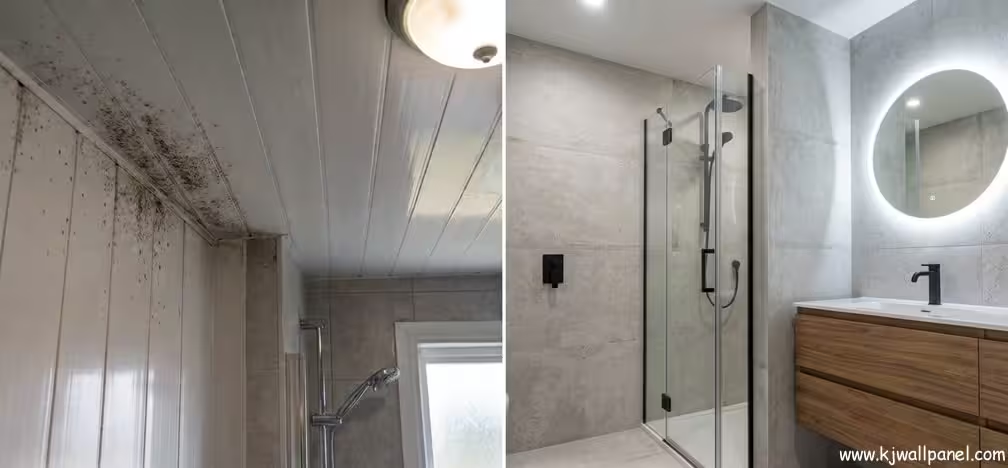
PVC ceiling boards have a practical advantage in humid environments: they do not readily absorb water, and their surfaces are easy to clean. Unlike ordinary gypsum boards, which can be damaged by persistent moisture, PVC panels are less likely to deteriorate because of water absorption in the board itself. They also do not contain the cellulose found in wood and paper-based materials. This makes PVC a suitable option for bathrooms where moisture is a regular concern. However, waterproof does not automatically mean mold-proof. Dust, dirt and other organic residue can still collect on a ceiling surface, and mold may develop if these contaminants remain damp for long periods. PVC helps reduce moisture-related problems with the panel, but it cannot replace proper ventilation or prevent mold caused by water leaks and persistent dampness.
The joints and edges deserve just as much attention as the panel material. PVC ceiling boards commonly use interlocking profiles that allow adjacent panels to fit together and create a neat ceiling surface. During production, the dimensions and shape of these profiles matter: even small differences can make panels harder to join or leave uneven gaps after installation. Cooling and sizing also affect the final shape of an extruded panel, so checking only the front surface is not enough when assessing product quality. Poorly fitted joints and unfinished edges can leave gaps where moisture may enter the space above the ceiling. Over time, condensation in this hidden area can create problems that are difficult to spot from inside the bathroom. Suitable edge trims and careful finishing around pipes, lights and exhaust fans help reduce these risks. Adequate ventilation remains equally important, particularly in bathrooms that are used several times a day.
Maintenance is another reason PVC ceiling boards are worth comparing with other materials. A painted gypsum ceiling may need repair or repainting if moisture damages the surface, while some wood-based products can swell or deteriorate when exposed to water. Aluminum ceiling systems are also widely used in bathrooms and can perform well when the panel finish, fittings and installation are suitable for the environment. PVC offers a different combination of benefits: it is lightweight, does not normally require repainting and is easy to clean with a damp cloth and mild detergent. In hotels, apartments and rental properties, where repeated maintenance can add to operating costs, these features can be useful. The best choice still depends on the project budget, appearance requirements and the conditions in which the ceiling will be installed.
There is more to a PVC ceiling board than its color or surface pattern. Two panels may look almost identical in a catalogue but differ in thickness, weight, rigidity, internal structure and joint fit. These differences can be influenced by the raw material formulation and extrusion process. In PVC panel manufacturing, the balance of resin, stabilizers and other formulation ingredients affects how the material processes and how the finished panel performs. Production conditions, including extrusion, cooling and sizing, also influence panel dimensions and shape. For buyers, this is why a product should not be judged by appearance alone. Surface treatment deserves attention too. Wood-grain and marble-effect PVC ceiling panels, for example, may use heat transfer printing or lamination, depending on the product. When evaluating samples, check for an even surface, consistent color, clean edges and a profile that fits properly with another panel. These practical checks can reveal differences that product photographs may not show.
Need Professional Consultation?
Contact our factory direct team via WhatsApp for instant support and quotation.
Product specifications should also match the needs of the local market. Some customers prefer simple white ceiling boards for residential projects, while others look for decorative designs for apartments, hotels or renovation work. Before confirming a shipment, check the panel width, thickness, weight, available colors, packaging and estimated container loading quantity. It is useful to compare samples against the stated specifications and confirm that the selected model has the required dimensions and surface finish. If you are ordering several designs, confirm the specifications of each model separately rather than assuming every panel has the same construction. Ask the manufacturer which product documents or test reports are available for your intended application, and clarify how the panels will be packed for export. These checks help importers compare quotations more accurately and reduce the chance of misunderstandings when the goods arrive. A lower unit price is not always the better choice if the specifications do not match the requirements of the project.
At Kejin, we have 15 years of experience manufacturing PVC ceiling panels for overseas building material wholesalers, distributors and project buyers. Our product range includes standard white panels as well as decorative wood-grain and marble-effect designs in different specifications. If you are looking for reliable Plastic Ceiling Boards for your local market or upcoming projects, contact us today to discuss product specifications, colors, surface finishes and bulk pricing. We can provide product photos, samples and available technical information to help you evaluate the right options for your business. We also welcome international buyers to visit our Plastic Ceiling Boards Factory, see our PVC ceiling panel products firsthand and discuss potential business cooperation with our team. Contact Kejin for a factory quotation or to arrange a factory visit. Please let us know your target market, preferred panel width and thickness, color and estimated order quantity so we can recommend suitable options for your wholesale or project requirements.