 Fuyang Kejin Decoration Materials Co., Ltd

Recycled PVC is often associated with waste, lower prices and inconsistent product quality. Virgin PVC is generally regarded as a more reliable option, but the difference is not always as simple as it seems. Much depends on where the recycled material comes from, how it was processed and whether its composition is properly controlled. In PVC wall and ceiling panel manufacturing, these factors can affect extrusion, surface appearance and the consistency of the finished panels.
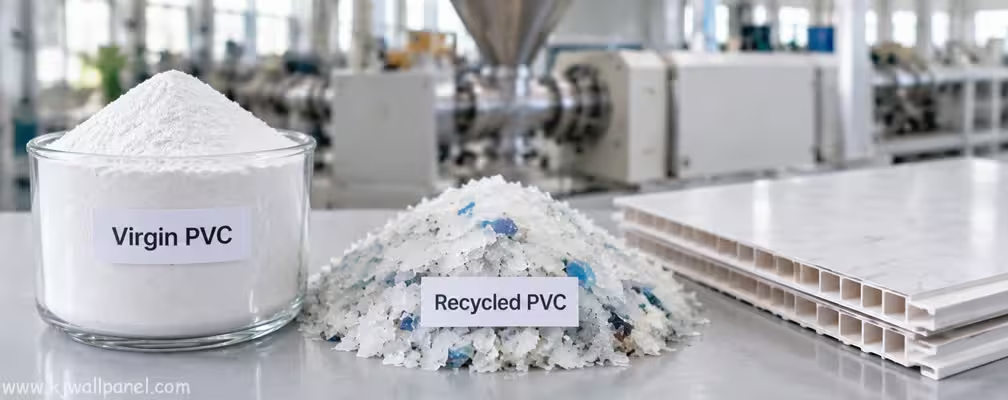
Virgin PVC is produced from newly manufactured resin, while recycled PVC comes from PVC materials that have already been processed or used. The distinction within recycled materials is important. Clean production offcuts collected directly from a factory are very different from mixed plastic waste recovered after consumer use. Production offcuts may have a relatively consistent composition, whereas post-consumer materials can contain other plastics, dirt and unwanted substances. Without proper sorting and processing, these differences can make recycled material difficult to use consistently.
The challenge becomes more apparent during production. Impurities and incompatible plastics can affect how PVC behaves during extrusion, sometimes leading to surface defects, color variations or changes in the physical properties of the finished panel. A material may look acceptable before processing, yet produce inconsistent results when used in a larger production run. For manufacturers supplying distributors and project buyers, maintaining consistent quality from one batch to another is just as important as achieving the required appearance in an individual sample.
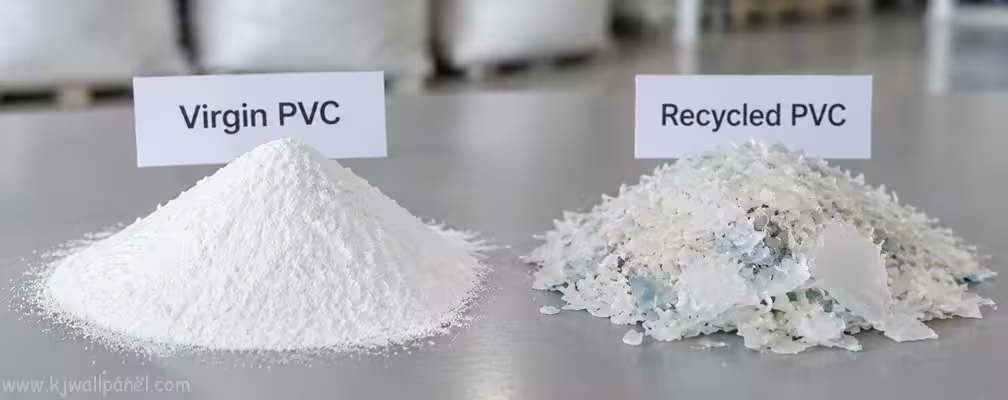
Raw material selection is only part of the process. PVC formulations also contain stabilizers, processing aids, impact modifiers and other additives that help achieve the required processing and product properties. When the composition of the base material changes, the formulation and processing conditions may need to change as well. Poor control can result in uneven surfaces, brittleness or unstable extrusion. Standards such as ISO 21306-2 provide recognized methods for preparing test specimens and assessing the properties of PVC-U extrusion materials. They also illustrate why material performance should be evaluated through appropriate testing rather than appearance alone.
Virgin PVC is often chosen when predictable processing and consistent material properties are priorities. Recycled PVC can also be suitable for certain products if its source, composition and processing history are properly controlled. The right choice depends on the intended application and the quality requirements of the finished panel. Impact resistance, for example, is one property worth considering for rigid PVC building products. ASTM D4226 describes test methods for evaluating the impact resistance of rigid PVC building products. The relevant test method should match the product and its intended use. Neither virgin nor recycled PVC should be judged by price or label alone.
Need Professional Consultation?
Contact our factory direct team via WhatsApp for instant support and quotation.
For importers and distributors, the resin type is only one part of evaluating a PVC panel. Thickness, weight, internal structure, dimensional consistency and surface finish all influence whether a product is suitable for a particular market or project. Rather than relying on descriptions such as premium quality or eco-friendly, buyers can ask suppliers about raw material specifications, production controls, product tolerances and relevant test results. It is also worth checking whether test results relate to the actual finished panel, rather than just the raw material. These details make it easier to compare products on a practical basis.
At Kejin, we manufacture PVC ceiling and wall panels using virgin PVC resin. With 15 years of manufacturing experience and automated production equipment, we focus on consistent materials and controlled production. Our panels are available with heat transfer printing and lamination finishes, and we provide OEM and ODM services for distributors, wholesalers and project buyers. If you are sourcing PVC wall or ceiling panels from China, contact Kejin to discuss your specifications, surface finishes and requirements for your market.