 푸양 케진 장식 재료 유한 공사

When comparing wholesale PVC ceiling sheets, a price difference of $0.50 per square meter can make a big difference to a bulk order. For example, one factory quotes $2.00 per square meter, while another offers a similar-looking panel for $1.50. At first glance, both products may have the same color, pattern, and surface finish. So why is one more expensive than the other? Large manufacturers can often reduce purchasing costs by buying raw materials in bulk, but the difference is not always explained by purchasing volume alone. Some factories use different PVC formulations, higher proportions of calcium carbonate, or recycled materials to control production costs. Others may produce panels with different wall thicknesses or internal structures, even when the finished products look almost identical. None of these factors automatically means a panel is poor quality, but they can affect its strength, toughness, and consistency. For distributors and importers, the real question is whether a lower purchase price comes with compromises that could lead to breakage, installation problems, or customer complaints later.
One of the first things to look at is the PVC formulation. A PVC ceiling sheet is not made from PVC resin alone. Manufacturers combine the resin with fillers, stabilizers, lubricants, processing aids, and other additives to achieve the required properties. The proportions of these ingredients matter because they influence how the material behaves during extrusion and how the finished panel performs. For example, a formulation designed primarily to reduce material costs may not provide the same resistance to cracking as one developed with greater emphasis on impact performance. However, there is no single formulation that works best for every PVC ceiling panel. A decorative panel for one market may have different requirements from a panel designed for another application or price range. What matters is whether the formulation is suitable for the intended product and whether the manufacturer can maintain consistent quality from batch to batch.
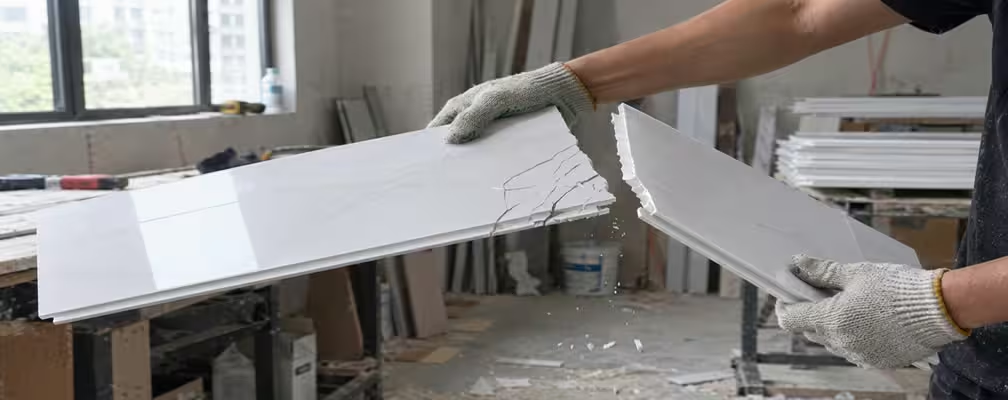
Calcium carbonate is another important part of the cost equation. It is widely used in PVC ceiling sheet production because it can reduce the amount of PVC resin required and influence the stiffness and processing characteristics of the finished panel. However, adding more filler is not simply a matter of saving money. If the filler content is too high for the formulation, or the particles are not dispersed properly, the panel may become more susceptible to cracking under impact or bending. The quality and surface treatment of the filler can also affect how well it works with the PVC compound. This is why two manufacturers using calcium carbonate can produce panels with different mechanical properties. For buyers, the important point is not whether a supplier uses filler, but whether the finished product offers the required balance of cost, stiffness, and toughness. A panel that looks good on the surface may still perform poorly if its formulation has not been properly developed and controlled.
Raw material quality can create further differences. PVC resin is available in different grades, and additives from different suppliers may vary in quality and performance. Recycled PVC materials can also be used in some formulations, depending on the product requirements and manufacturing process. Their effect on the finished panel depends on factors such as the consistency of the recycled material, its previous processing history, the proportion used, and how it is incorporated into the formulation. Poorly controlled recycled material can introduce variation that makes product quality harder to maintain. However, it would be inaccurate to say that every panel containing recycled material is brittle, just as virgin materials alone cannot guarantee excellent toughness. The same principle applies to additives: the right materials must be selected and used in suitable proportions. For a manufacturer, controlling raw material quality is not only about the initial purchase price; it is also about producing panels that meet the same requirements throughout repeated production runs.
Even with a suitable formulation, production conditions can affect the final result. During PVC extrusion, the compound needs to be processed under appropriate conditions to achieve proper fusion and a consistent material structure. If the processing temperature is too low or the material does not receive adequate processing, fusion may be insufficient. Excessive heat exposure, on the other hand, can cause PVC degradation and damage the material’s properties. Mixing quality, extrusion stability, calibration, and cooling also influence the consistency of the finished panel. The panel itself matters too. If the wall thickness is insufficient or unevenly distributed, certain areas may be more likely to crack or break during handling and installation. Automated production equipment can help maintain stable operating conditions, but it does not eliminate the need for suitable formulations, experienced process control, and regular inspection. Consistent quality comes from managing the entire production process rather than relying on a single machine or production setting.
전문적인 상담이 필요하신가요?
WhatsApp을 통해 당사 공장 직속 팀에 문의하시면 즉시 지원 및 견적을 받아보실 수 있습니다.
For wholesale buyers, the best way to compare PVC ceiling sheets is to look beyond the quotation and surface appearance. Start by confirming that the samples have the same dimensions, thickness, cross-sectional structure, and surface finish. These details matter because two panels that look alike may contain different amounts of material or have different structural designs. Next, compare their performance using consistent methods. If brittleness is a concern, impact testing and suitable bending tests can help reveal differences that are not obvious during a visual inspection. The test conditions should be the same for each sample, and the results should be considered alongside the product’s intended application. Buyers should also ask how the manufacturer checks wall thickness, controls raw material batches, and monitors finished-product quality. These questions are particularly important when ordering a full container, because a small difference in unit price can quickly lose its appeal if the goods arrive with inconsistent quality or generate excessive breakage during installation. The aim is not simply to find the cheapest panel, but to find one that meets the market’s requirements at a competitive overall cost.
At Kejin, we understand that overseas wholesalers and building material distributors need more than an attractive quotation. They need wholesale PVC ceiling sheets with consistent specifications, dependable production, and quality suitable for their target markets. With 15 years of manufacturing experience, Kejin uses fully automated production equipment to support efficient manufacturing and stable production control. We supply PVC ceiling panels in different widths, thicknesses, colors, and surface finishes, including heat-transfer and laminated designs, to meet different market requirements. Whether you are sourcing standard white panels or decorative options for your product range, our team can discuss your specifications and bulk order requirements before production. If you are comparing suppliers and want to understand which PVC ceiling sheet is suitable for your market, contact Kejin to discuss your requirements and request a wholesale quotation. Tell us your preferred dimensions, thickness, color, surface finish, and estimated order quantity, and we will help you explore the available options.